Healthy Soils for Healthy Cities
World Soil Day 2025
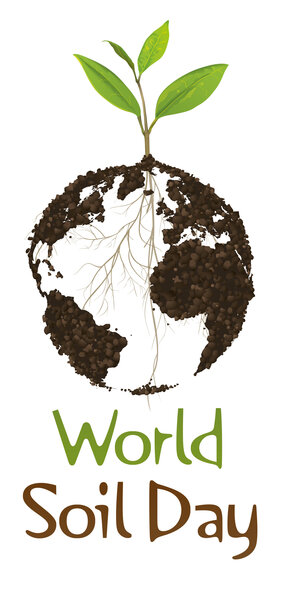
The theme for this year’s World Soil Day "Healthy soils for healthy cities” highligts the role of soils in cities and challenges posed by soil sealing and urbanization.
World Soil Day (WSD) is an annual held event, endorsed by the Food and Agriculture Organization of the United Nations (FAO) and the United Nations (UN) General Assembly. Since 2014, WSD is recognized as an official international day and serves as a worldwide platform for raising awareness and a call to action within the framework of the Global Soil Partnership. Find more information here.
This year, we ask ourselves: Why are healthy soils so important for healthy cities? What are the threats and what are possible solutions?
Healthy urban soils offer many values and ecosystem services. They secure our need for nutritious food. About 55 percent of the world’s population (about 4.5 billion) live in urban areas today and this number is expected to climb towards 68 percent by 2050.
Healthy soils make healthy cities:
- They regulate temperature by cooling the air temperature;
- Store carbon and help to mitigate climate change and adaption;
- Increase Biodiversity;
- Filter air pollutants and water;
- Store large amounts of water; and
- Increase food security through agricultural use.
At parallel, the need for construction and transport infrastructure (including for renewable energy) increases. This includes urban sprawl, often referred to low-density or dispersed urban development, with car-dependent areas and dispersed urban fabric.
The latest statistics about land take in Europe are alarming: based on Copernicus land monitoring of urban areas and its adjacent commuting zones, the average net land take per year increased by 32% (yearly averages 2018-2021 compared to 2012-2018) - this corresponds to a land take rate of 540 km2/year. Most of this loss took place in agricultural land, while forests and other herbaceous vegetation such as shrublands are also concerned. Only few European countries were able to decrease the numbers in land take.
To meet the goal of achieving no net land take by 2050, the EU would have to reduce the annual net land take by 27 km2, starting to count in retro perspective from 2022 onwards.
Many solutions for greener cities already exist, such as permeable surfaces to reduce soil sealing, expansion of urban green spaces and green infrastructure, sustainable drainage approaches and urban agriculture. Each citizen has impact: by composting at home, using organic gardening methods and helping to create green spaces in our communities, supporting local initiatives and own education.
Worldwide, many events are organized each year around World Soil Day. Many of them can be found on the World Soil Day event map on the FAO World Soil Day website.
For more details about soils, visit our Key Facts on Soil Health Webpage or take our quiz below to test your knowledge on soils!